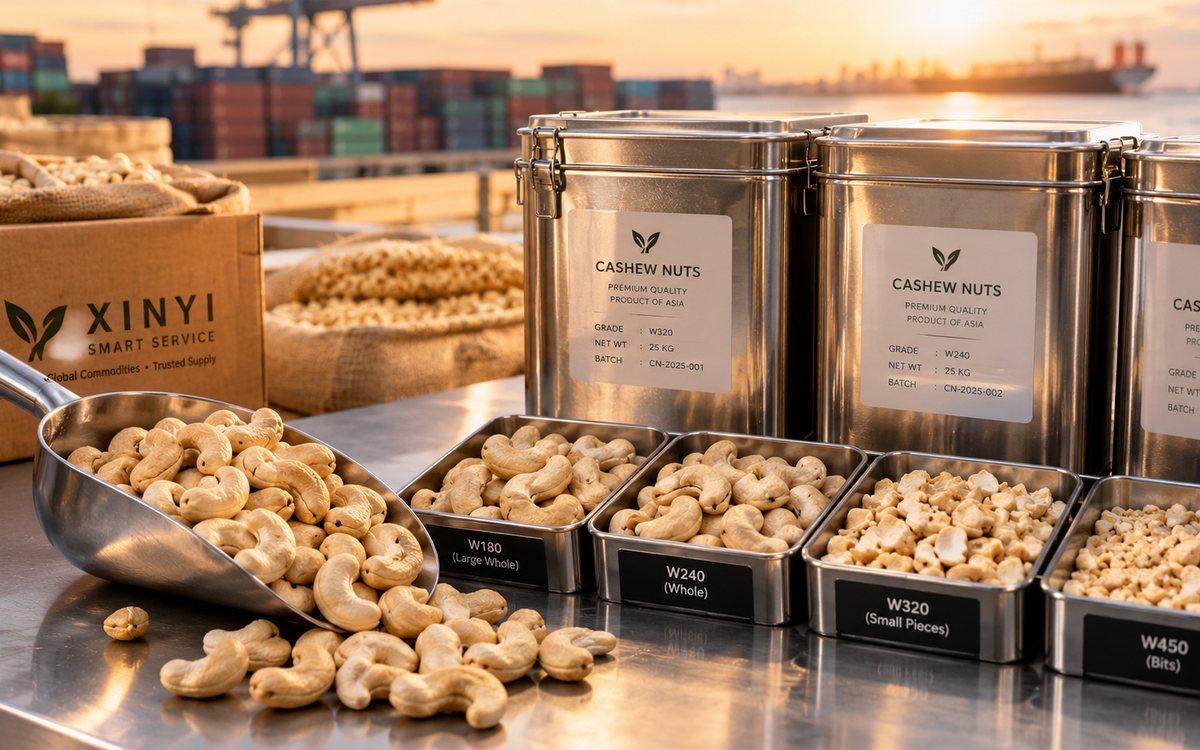
Nuts and kernels, graded to count and delivered to spec
Nuts are bought on grade, not on description. We contract against recognised counts — W240, W320, SW, LBW — and every lot ships with a moisture, aflatoxin and defect report that matches what the container actually holds. Origin is…
8 lines in this division.
Nuts are bought on grade, not on description. We contract against recognised counts — W240, W320, SW, LBW — and every lot ships with a moisture, aflatoxin and defect report that ma…
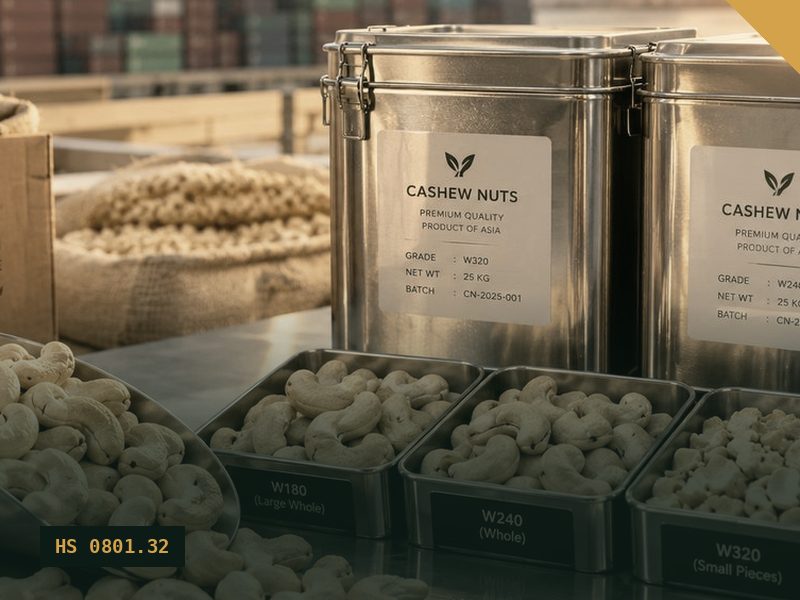
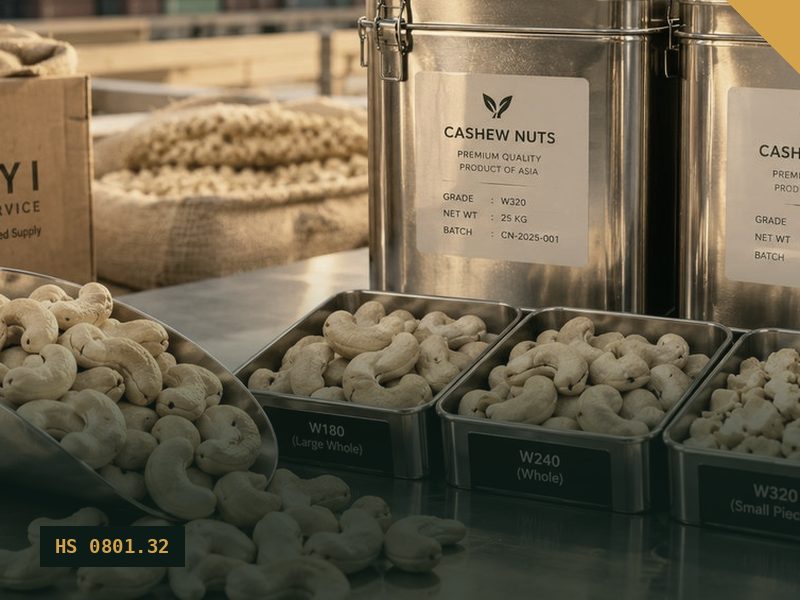
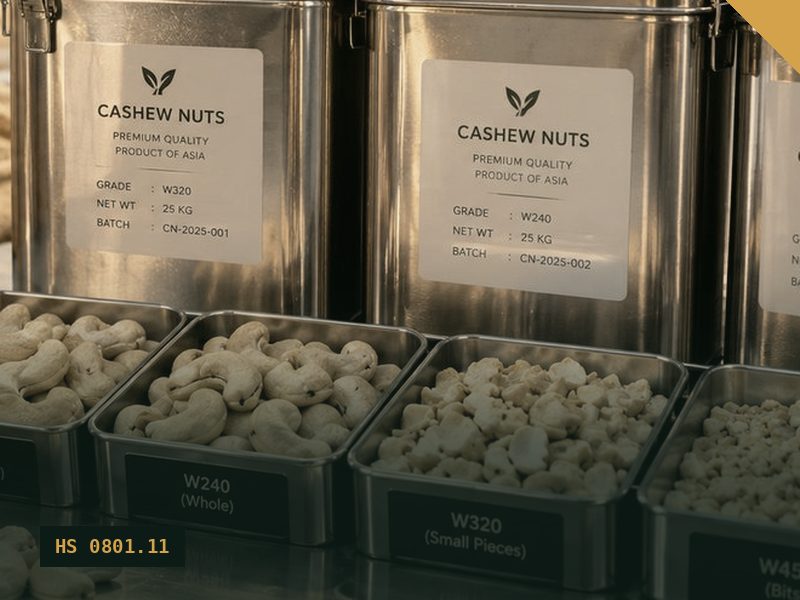
Producing nuts & kernels.
Nuts are bought on grade, not on description. We contract against recognised counts — W240, W320, SW, LBW — and every lot ships with a moisture, aflatoxin and defect report that matches what…
How this lot is processed and graded
Raw material is steam-conditioned and shelled at the plant, then peeled, dried to the contract moisture and passed over calibration screens that separate the counts. Grading is the step buyers underestimate: a W320 that carries W240 and W450 across the sieve is a commercial problem at destination, so our lines run electronic colour sorting behind the mechanical screens and hand-picking behind that. Because we control the drying, we can hold moisture at the low end of the range, which is what protects the kernel through a long ocean leg into a humid market.
Quality control
Each lot is checked for count per pound, moisture, defective and broken percentage, foreign matter and colour uniformity. Aflatoxin B1 and total aflatoxin are screened against the destination limit — 4 ppb total for the European Union, higher elsewhere — and the certificate is issued before the lot is offered for loading.
Packing and private label
Standard export packing is vacuum-packed tins or flexible pouches of 10 or 25 kg net inside master cartons, nitrogen-flushed where the transit time or destination climate warrants it. Bulk formats run in multiwall paper sacks or jute. Retail packs from 100 g upward run on our own pouching line under your brand, with barcodes and destination nutrition labelling.
Grading, counts and tolerances
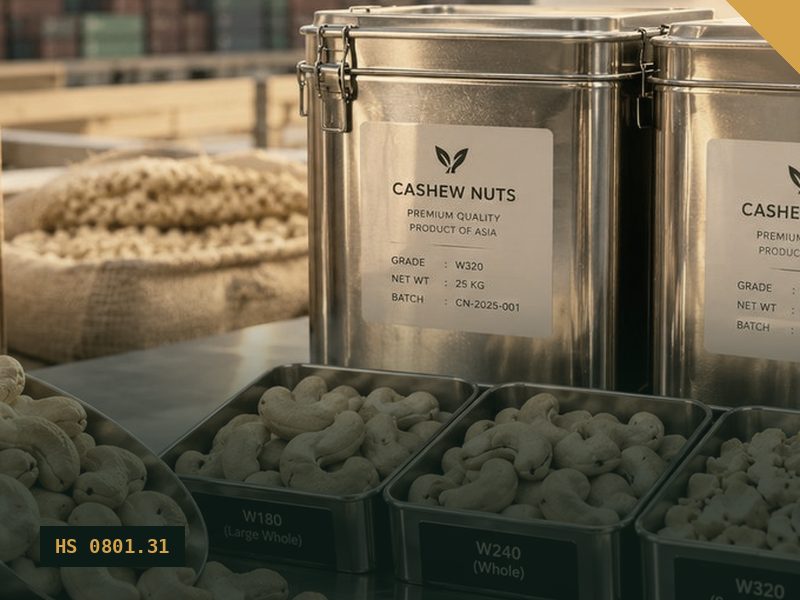
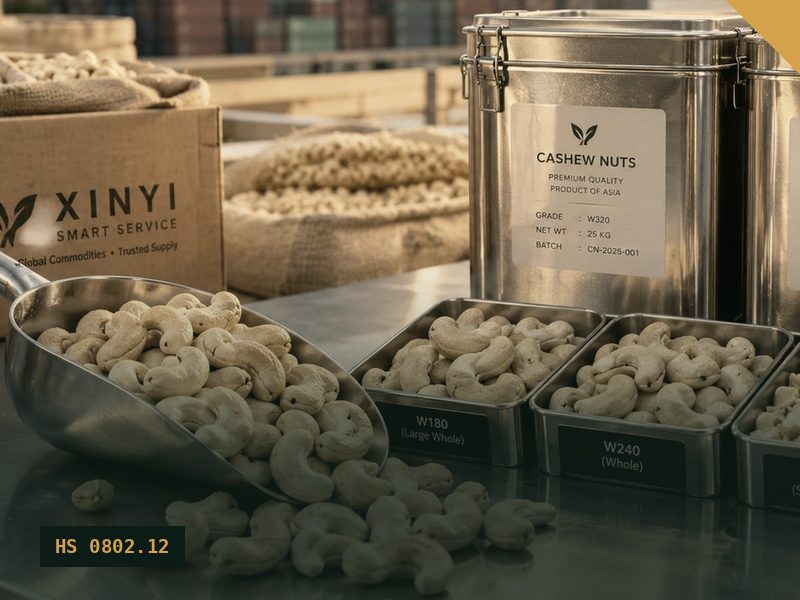
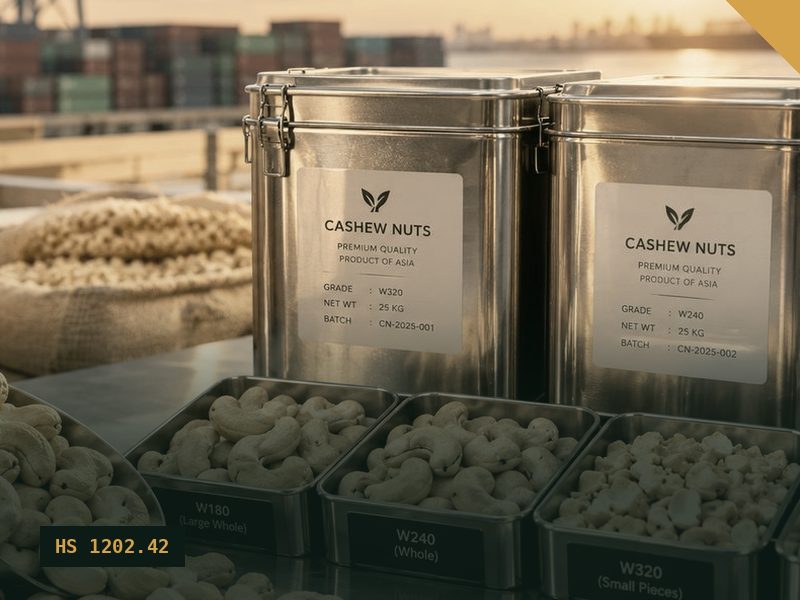
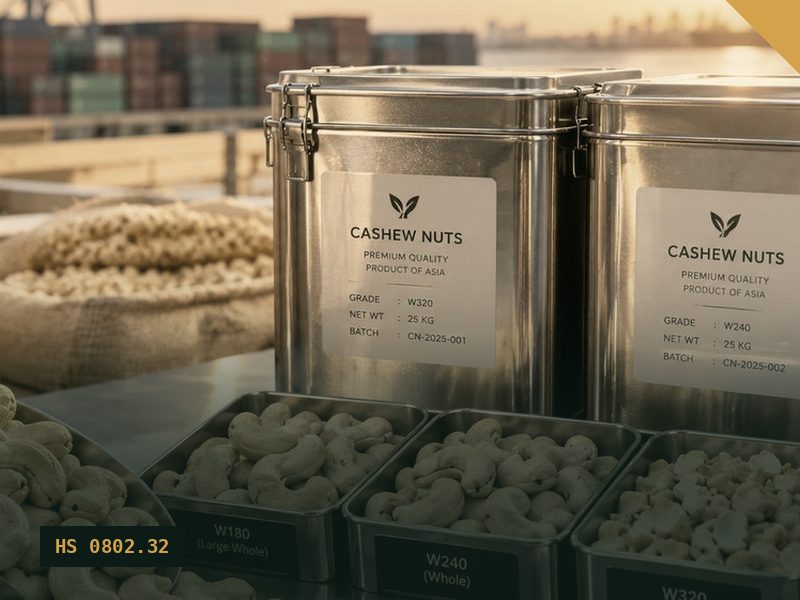
Cashew kernels are graded by count per pound and by colour: white wholes W180 through W450, scorched wholes, butts, splits and pieces. Almonds ship as Nonpareil, Carmel or Independence in 23/25, 27/30 and 30/32 counts. Groundnuts are contracted on Java or Bold type at 50/60, 60/70 or 80/90 counts. We quote defect tolerances in the contract rather than leaving them to custom.
Food safety and testing
Aflatoxin B1 and total aflatoxin are tested by HPLC at origin and, on request, again at load port. Moisture is held to 5% maximum on kernels. Metal detection, X-ray screening and pest control certificates accompany shipments into the EU, Japan and the Gulf.
Packing that survives the voyage
Cashew kernels ship vacuum-packed in 22.68 kg (50 lb) tins under nitrogen flush, two tins to a carton, or in 10 kg / 25 kg vacuum pouches. Raw cashew nuts move in 80 kg jute bags. Groundnuts and almonds travel in 25 kg or 50 kg PP bags with desiccant and container liners.
Questions about this division.
01What do the cashew grades W240 and W320 mean?
02Do you supply raw cashew nuts as well as processed kernels?
03How do you control aflatoxin risk?
Need a firm price on nuts?
Send the grade, the quantity, the destination port and the Incoterm. A named trader replies within 48 hours.